American Accent Training: What Actually Works for Adults
· 11 min read · Breakers Academy
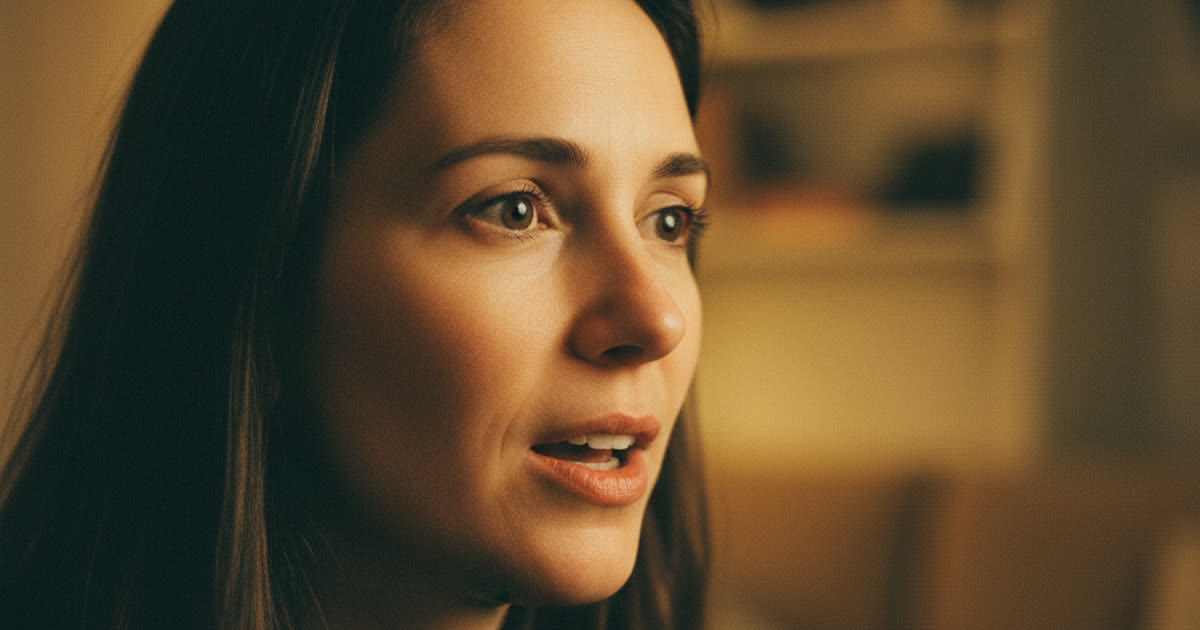
You say the word. The other person tilts their head slightly and says "sorry?" You say it again, louder. They still don't get it, and you switch to a different word entirely — one you're sure of.
That moment is what most people mean when they say they want accent training. Not "I want to sound American." They mean: I want to stop losing three seconds and a bit of authority every time I say a word with a t in the middle of it.
The good news is that the fix is much narrower than it looks. The bad news is that almost every accent course starts in the wrong place.
Accent and clarity are two different things
You can have a strong accent and be perfectly easy to understand. This is not encouragement — it is a documented finding. Munro and Derwing's 1995 study in Language Learning had native listeners rate and transcribe second-language speech, and found that accentedness, comprehensibility and intelligibility are related but partially independent dimensions. Speech that listeners rated as heavily accented was often transcribed with near-perfect accuracy.
That result reframes the entire project. "No accent" is a target most adults never reach, and you will measure yourself against it daily and lose. "Understood the first time, every time" is achievable in months, and it is the thing that actually affects your meetings and your phone calls.
So the useful question is not what does my accent sound like. It is which specific features of my speech are costing listeners effort. Usually there are fewer than ten, and they are not the ones people expect.
Word stress breaks more sentences than any single sound
If you fix one thing, fix which syllable you hit hardest. Field's 2005 study in TESOL Quarterly had listeners transcribe words in which the lexical stress had been deliberately moved, and found that misplaced stress measurably damages word recognition — and that the direction matters more than the size of the error. Shifting stress to the right of where it belongs hurt intelligibility considerably more than shifting it to the left.
The mechanism is simple. English listeners use the stressed syllable as the search key for the word. Put the stress in the wrong place and you haven't produced a mispronounced version of your word; you've produced a different word, or no word at all. Say ho-TEL as HO-tel — a shift to the left — and people usually recover. Say COM-fort-a-ble as com-FOR-ta-ble — a shift to the right — and they often don't.
| Word | American stress | Common misplacement |
|---|---|---|
| comfortable | COMF-ter-bul (3 syllables) | com-FOR-ta-ble |
| vegetable | VEJ-ta-bul (3 syllables) | ve-ge-TA-ble |
| develop | de-VEL-op | DE-velop |
| colleague | COL-leeg | col-LEEG |
| percent | per-CENT | PER-cent |
| category | CAT-uh-gor-ee | cat-E-gory |
| opportunity | op-por-TU-ni-ty | op-POR-tunity |
| photographer | pho-TOG-ra-pher | PHO-tographer |
Two rules cover a large share of business vocabulary and are worth memorising outright:
- Words ending in ‑tion, ‑sion, ‑cian: stress the syllable immediately before the ending. pre-sen-TA-tion, in-for-MA-tion, de-CI-sion, tech-NI-cian.
- Words ending in ‑ic, ‑ical, ‑ity: same rule, stress the syllable immediately before the ending. stra-TE-gic, e-co-NOM-ic, a-ca-DEM-ic, res-pon-si-BIL-i-ty.
American English is a rhythm, not a set of sounds
English does not give every syllable equal time. Stressed syllables are long, loud and clear; unstressed syllables are squeezed into a short, colorless vowel — the schwa, the most frequent vowel sound in the language. If you pronounce every syllable fully and evenly, you sound careful and slightly robotic, and native listeners work harder than they should.
Listen to how a fluent speaker actually says these:
| Written | Actually spoken | What happened |
|---|---|---|
| I have to go | "I hafta go" | have to fuses, vowel reduces |
| What are you doing? | "Whaddaya doin'?" | flapped T, schwa, dropped g |
| a cup of coffee | "a cup uh coffee" | of reduces to schwa |
| I'm going to call him | "I'm gonna call 'im" | going to fuses, H drops |
| Did you eat yet? | "Jeet yet?" | full connected-speech collapse |
You do not have to produce the extreme versions. You do have to recognise them, because a huge amount of "I couldn't follow the meeting" is not vocabulary — it is failing to hear that "wuddyuhthink" was "what do you think." Train your ear on reduced speech and comprehension improves before your accent does.
The five features worth drilling if you live in the US
Five features carry almost all the weight in American English: they either change meaning outright or mark your accent most audibly. Drill these; ignore the rest until they're solid.
- The R after a vowel. American English is rhotic — the R in car, work, first, order, particular is fully pronounced, with the tongue bunched or curled back and never touching the roof of the mouth. Dropping it or trilling it is probably the single most audible feature of a non-American accent.
- The flapped T. When T follows a vowel or an R and the next syllable is unstressed, Americans produce a fast tap that sounds like a D: water → "wader," better → "bedder," city → "ciddy," party → "pardy," thirty → "thirdy," later → "lader." After N it often disappears entirely: twenty → "twenny," internet → "innernet."
- /ɪ/ versus /iː/. ship/sheep, live/leave, bit/beat, it/eat, fill/feel. The difference is not only length — /iː/ is tense with the tongue high and forward and the lips slightly spread; /ɪ/ is lax, shorter and more relaxed. This pair changes meaning constantly, which is why it earns a place on a short list.
- Voicing at the end of a word. bed vs bet, bag vs back, prize vs price, hard vs heart. Many languages devoice final consonants automatically; English does not, and the vowel before a voiced consonant is noticeably longer. Lengthen the vowel in bed and the D largely takes care of itself.
- Consonant clusters and ‑ed endings. asked, texts, twelfths, worked, wanted. English tolerates clusters most languages do not. On regular verbs the ‑ed ending has exactly three pronunciations: /t/ after voiceless sounds (worked = "workt"), /d/ after voiced sounds (called = "calld"), /ɪd/ only after T or D (wanted = "want-id"). The verb rule has no exceptions. A small set of ‑ed adjectives does keep the extra syllable anyway — naked, wicked, wretched, crooked, a learned man, an aged relative — but they are a closed list to memorise, not a pattern.
Your first language predicts most of your difficulties
Accent difficulties are not random — they are the predictable result of which sounds and rules your first language does and does not have. Knowing your list saves months of undirected practice.
| First language | Usually needs work | Concrete example |
|---|---|---|
| Spanish | /b/ vs /v/; vowel added before initial S-clusters; /ɪ/ vs /iː/; final consonant clusters | school becomes "eschool"; very and berry merge |
| Portuguese | Vowel added after final consonants; T and D before an ee sound become "ch"/"j"; final ‑L becomes "w" | Facebook becomes "Facebookee"; team becomes "cheam" |
| Russian | Final consonants devoiced; /w/ vs /v/; unaspirated P, T, K; clear vs dark L | bed sounds like bet; west sounds like vest |
| French | Word stress placed on the final syllable; /h/ dropped, then over-corrected back in; /ɪ/ vs /iː/ | DEvelop becomes deveLOP; house becomes "ouse" |
Vowel reduction is the one item that affects almost everyone, but for two different reasons. Speakers of syllable-timed languages — Spanish, Italian, French — give every syllable roughly equal weight, so nothing reduces and the sentence comes out evenly paced and slightly flat. Speakers of languages that do reduce heavily, Russian among them, reduce by their own language's rules, which put the weak vowel in places English doesn't. Either way the beat lands where a native listener isn't expecting it.
A fifteen-minute daily routine that actually produces change
Do these five things, in this order, once a day. Fifteen minutes daily beats ninety minutes on Sunday, because pronunciation is a motor skill and motor skills consolidate through frequency, not volume.
- Two minutes — mark and read. Take five sentences of any real English text. Underline the stressed syllable in every word of three syllables or more. Read it aloud, exaggerating those beats.
- Five minutes — shadow. Play 60–90 seconds of natural American audio (a podcast, an interview — not a graded ESL recording) and speak along about two seconds behind, copying rhythm and melody rather than accuracy. Repeat the same clip all week.
- Three minutes — minimal pairs, out loud. Pick one pair from your list: ship/sheep, bed/bet, very/berry. Say them in alternation, then in a sentence: "The cheap ship left."
- Three minutes — record and listen. Speak for 60 seconds about your day, then play it back. This is uncomfortable and it is where the diagnosis happens. Write down one word that sounded wrong.
- Two minutes — fix one word you say daily. Your job title. Your street. Your company's name. Your coffee order. Look it up, drill it ten times, and use it tomorrow.
The recording step is the one people skip and the one that matters most. You cannot correct what you cannot hear, and perception almost always improves before production does.
What does not work, and why
Passive listening. Watching hundreds of hours of American television improves your ear and does essentially nothing for your mouth. Production is a physical skill; it requires production.
Apps that only give you a score. Being told your party scored 62% tells you nothing about what your tongue did. Use apps for repetition and ear training, not diagnosis.
Practising sounds in isolation forever. A perfect isolated /θ/ that vanishes the moment you speak a sentence is a common and demoralising outcome. Move a sound into a phrase within a few days, and into unrehearsed conversation within a few weeks.
Trying to fix everything at once. Two features at a time, two weeks each. That is the pace that sticks.
Working entirely alone. This is the real ceiling. Your ear is calibrated by your first language, which is exactly why the errors are invisible to you — you hear yourself saying what you intended, not what came out. A trained listener who can tell you "your tongue is touching your teeth on that R" replaces weeks of guessing. That diagnostic work is most of what happens in one-to-one pronunciation coaching, and it's the reason a few focused sessions often outperform a year of solo drilling.
What this looks like in practice
Pronunciation improves fastest when it is attached to sentences you actually need to say, not to word lists. Rehearsing your own job title, your own street name and the five phrases you use every week at the pharmacy or the school pickup gives your mouth repetitions that have somewhere to go.
That's the principle behind our scenario-based method — sound work happens inside a real situation rather than in a drill sheet — and it's how pronunciation is handled in Real-Life English, where the vocabulary is the vocabulary of your actual week.
A free PDF of high-frequency English phrases for real situations — the kind worth drilling out loud until they're automatic. Good raw material for step 5 of the routine above.
Frequently asked questions
Can an adult really change their accent?
Yes, adults can measurably change how they are understood, though a fully native-sounding accent is rare after childhood. The reliable gains are in word stress, rhythm and a small set of consonants and vowels. With consistent daily practice, the realistic result is being asked to repeat yourself noticeably less within two to three months.
How long does American accent training take?
Expect the first noticeable change in four to six weeks of daily practice of ten to fifteen minutes, and a stable difference other people comment on at around three months. Speed depends far more on whether you get accurate feedback than on how many hours you put in.
Should I try to lose my accent completely?
No, and it is usually the wrong goal. Research on second-language speech has shown that heavily accented speech can still be highly intelligible, which means clarity and accent are not the same thing. Aim to be effortless to understand, not to sound like you were born in Ohio.
Is American or British pronunciation better to learn?
Neither is better; pick the one that matches the people you talk to and stay consistent. If you live and work in the United States, American pronunciation is the practical choice, mainly because of the rhotic R in words like car and work and the flapped T in water and better.
Do pronunciation apps work for accent training?
Apps are useful for ear training and repetition, but most of them only give you a score, not a diagnosis. They can tell you that party sounded wrong; they rarely tell you that your tongue was in the wrong place. Use them for daily drilling and get a human to identify what to drill.
The one thing to take away
Stop trying to sound American and start trying to be effortless to understand. Those are different projects with different timelines, and only one of them is available to an adult. Get the stress on the right syllable, let the unstressed syllables shrink, drill the four or five sounds your first language didn't give you, and record yourself often enough to hear what you're actually doing. That is the whole method.