How to Introduce Yourself in an Interview (With Scripts)
· 10 min read · Breakers Academy
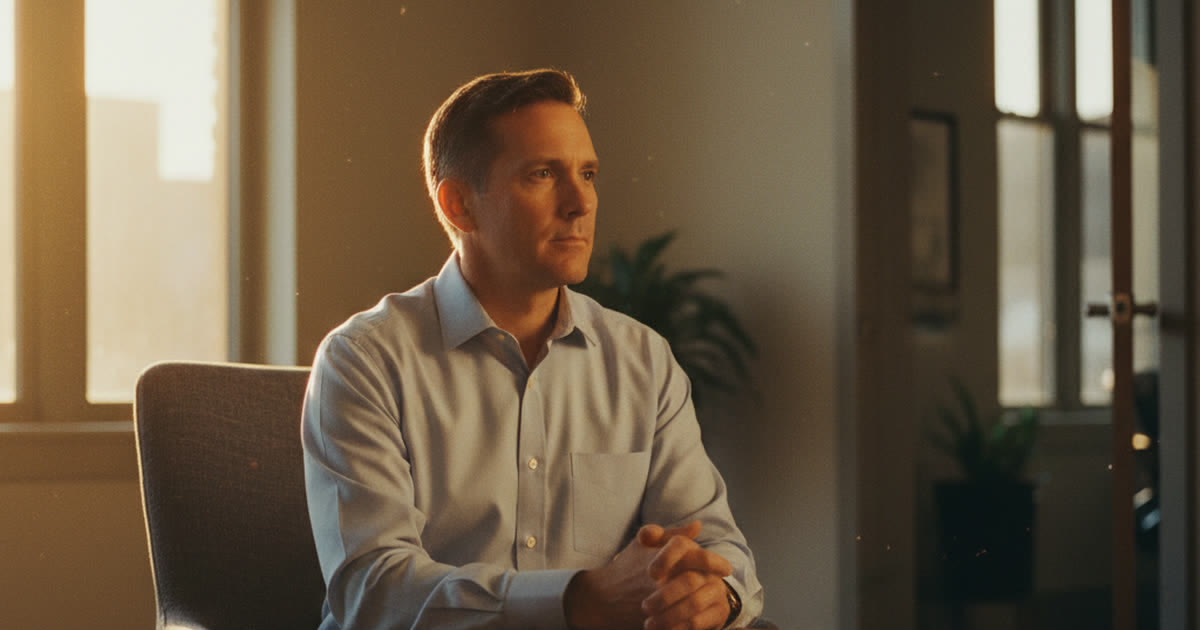
The interviewer smiles, opens a notebook and says: "So, tell me a little about yourself."
It sounds like the easiest question in the interview. It is usually the one that goes worst. People who can discuss complex work in English for an hour freeze on this one, because it is not really a question — it is a request for a prepared 90-second performance that most candidates have never written.
"Tell me about yourself" is a job pitch, not a biography
The interviewer is asking one thing: why should we keep talking? They want to hear the version of your career that explains why you are sitting in front of them today.
That means the correct answer is professional, selective and forward-looking. It is not chronological. It does not begin with your childhood, your university or the year you moved to the United States, even when those things are genuinely important to who you are. Anything that does not help them picture you in this job goes in a different answer, later.
"Give me the short version of your background" is the same question and takes the same answer. "Walk me through your resume" is not — that one does expect chronological order, job by job, and it is about what you already have rather than what you want next. If you want the long version of this answer alone, we wrote a whole piece on answering "Tell me about yourself".
The three-part structure: present, past, future
Use present, past, future — in that order. It is the most reliable structure for this answer because it front-loads what matters and ends on the job you are applying for.
| Part | Length | What goes in it |
|---|---|---|
| Present | 1–2 sentences | Your current role and what you actually do in it |
| Past | 2–3 sentences | The experience and one or two concrete results that qualify you for this job |
| Future | 1–2 sentences | Why this role, at this company, now |
Some working sentence frames:
- Present: "Right now I'm a [role] at [company], where I handle [responsibility]."
- Past: "Before that I spent [X] years in [field]. The project I'm proudest of was [specific thing], where we [specific result]."
- Future: "I'm looking for a role where I can [do more of X], which is why this position caught my attention."
The single most common mistake is a beautiful present and past with no future. Without the last part your answer is a summary; with it, your answer is an argument.
Three full scripts you can adapt
Each script below is one complete 60-to-90-second answer. Change every specific — the role, the city, the numbers — and keep the shape.
Experienced professional, same field:
"I'm a financial analyst with about eight years in commercial real estate. Right now I'm at a mid-size firm in Miami, where I handle underwriting for acquisitions — mostly multifamily. Before that I did four years of corporate finance in Bogotá, which is where I learned to build models from scratch. Last year I led the analysis on a portfolio deal that closed at forty million. I'm looking for a team where I can move from pure analysis into deal structuring, and that's exactly how this role is written."
Changing careers:
"For the last six years I've been a project manager in construction, running teams of twenty to thirty people and budgets up to two million. What I kept enjoying most was the data side — forecasting, scheduling, figuring out why a project slipped. So I spent the last year getting certified in data analytics and rebuilt our reporting system as my capstone. I want to do that work full time now, and this position is the clearest version of it I've seen."
Early career or first US job:
"I finished my degree in marketing in São Paulo and worked for two years at an agency there, mainly on social campaigns for retail clients. I moved to Florida last year, and since then I've been doing freelance content work for two local businesses while I get to know the market here. I'm ready for something full time on an in-house team, and your company is one of the few doing this in both English and Portuguese."
Notice what none of them contain: age, marital status, children, visa status, or the phrase "I am a hard-working person."
What US interviewers are not expecting to hear
Leave age, marital status, children, religion, nationality and health out of a US interview introduction. US interviewers are trained not to ask about any of it, so volunteering it puts them in the awkward position of having to hear something they were careful not to request. In much of Latin America, Brazil and the Russian-speaking world a personal introduction reasonably includes age, marital status and family; in a US interview it does not.
The full list, unless you are asked directly:
- Age or birth year
- Marital status, spouse, children
- Religion, nationality, immigration status
- Health
- A full list of every job you have ever held
- Adjective self-description with no evidence: "responsible", "hard-working", "a fast learner"
That last one is worth a moment. "I'm a fast learner" is empty. "I learned the company's inventory system in two weeks and then trained the other three people on my shift" is the same claim, proven. Replace every adjective about yourself with the thing you did.
Before the question: the first sixty seconds in the room
The interview starts before you sit down, and it is almost entirely fixed phrases. Learn these and one whole category of anxiety disappears.
| Situation | Say this |
|---|---|
| Greeting the interviewer | "Hi, I'm Marta — nice to meet you." |
| They say "Nice to meet you" first | "Nice to meet you too, thanks for having me." |
| They ask how you are | "I'm good, thank you — how are you?" |
| They ask about the drive or parking | "It was easy, thanks — the directions were clear." |
| Offered water or coffee | "Water would be great, thank you." / "I'm fine, thank you." |
| Sitting down | "Thanks for making the time today." |
| Your name is often mispronounced | "I'm Dmitriy — most people here call me Dee, either is fine." |
That last line is worth using. Saying how you would like to be addressed, once, early and lightly, saves the interviewer forty minutes of avoiding your name.
Phrases that translate badly into interview English
A short list of phrases does most of the damage, and they are all word-for-word translations out of Spanish, Portuguese and Russian. Each one is polite and completely normal in the original language and lands oddly in an English interview.
| What you mean | Common literal version | Say this instead |
|---|---|---|
| Encantado de conocerle | "Delighted to know you." | "Nice to meet you." |
| Tengo 34 años y estoy casado | "I have 34 years and I am married." | (leave out entirely) |
| Me dedico a… | "I dedicate myself to marketing." | "I work in marketing." / "I'm in marketing." |
| Trabajo aquí desde 2019 | "I work here since 2019." | "I've been here since 2019." |
| Sou formado em… | "I am formed in engineering." | "I have a degree in engineering." / "I studied engineering." |
| Estoy a su disposición | "I am at your disposal." | "Happy to answer any questions." |
| Я занимаюсь аналитикой | "I am engaged in analytics." | "I work in analytics." / "I do analytics." |
| Опыт работы 8 лет | "My experience of work is 8 years." | "I have eight years of experience." |
One grammar point does more work here than any other: present perfect for ongoing time. "I have been a nurse for six years" — not "I am a nurse for six years", not "I work as a nurse since 2019". If you fix one structure before an interview, fix that one, because you will need it in the first thirty seconds.
What to say when you did not catch the question
Ask. Immediately, once, without a chain of apologies.
- "Sorry, could you repeat that?"
- "Could you say that one more time?"
- "Just to make sure I understood — are you asking about X?"
- "Do you mean X, or more about Y?"
All four are used by native speakers in interviews every day. The mistake is not asking; the mistake is answering a question you guessed at, which produces a long confident reply that has nothing to do with what was asked.
If you need a moment to think rather than to hear, use a real thinking phrase instead of silence: "That's a good question — let me think for a second." Then take the second. Two quiet seconds sound composed. Two seconds of "uhh, so, like, umm" do not.
How to open a video interview
Say your name and your role in the first sentence, because on video the interviewer is often still checking that they can hear you. "Hi, can you hear me okay? Great — I'm Ana, thanks for making the time."
Two things matter more on video than in person. Pause after each sentence — slight audio delay makes people talk over each other, and a half-second gap prevents most of it. And when you do get cut off, say "Sorry, you go ahead," then let them. It is graceful and it costs nothing.
How to practice this so it survives the nerves
Write your 90-second answer out in full, record it once on your phone, then cut every sentence that does not earn its place. A first draft is almost always longer than what you will actually say.
Then say it out loud enough times that you could deliver it while distracted. Under interview pressure your English drops below its normal ceiling, so the version you practice needs to be simpler and more automatic than the version you can produce calmly at your kitchen table. Simple sentences you can say perfectly beat complex ones you can nearly say.
The rest of the interview cannot be scripted the same way, and that is where most preparation stops short. Talking about your work under pressure, defending a decision, negotiating an offer — those are rehearsable too, and rehearsing them out loud, live, with a teacher listening is what our Business English program is built around. If you have a specific interview on a specific date, private classes let you spend all of that time on your answers rather than on general practice.
A free PDF, 40 Phrases for the American Office — greetings and small talk, joining a meeting, asking for help, disagreeing politely, networking — grouped by situation so you can find the right one in ten seconds.
Frequently asked questions
How long should my interview introduction be?
Between 60 and 90 seconds. That is roughly 150 to 200 spoken words — long enough to cover your current role, your relevant background and why you want this job, short enough that the interviewer does not start checking the time. If you finish in 20 seconds you sound underprepared; past two minutes you are taking over the interview.
How do I start my answer to "Tell me about yourself"?
Start with your professional identity in one sentence: "I'm a financial analyst with about eight years in commercial real estate." Do not start with "Well, I was born in…" or "So, my name is…" — they already have your name. The first sentence should tell them what you do, not where you come from.
Should I mention my age, marital status or children in a US interview?
No. US interviewers are trained not to ask about age, marital status, children, national origin or religion — several of those are protected characteristics under federal anti-discrimination law, and the rest create the appearance of bias. Volunteering the information puts the interviewer in an awkward position. In many countries this detail is standard in an introduction; in a US interview it is not.
What do I say if I do not understand the interviewer's question?
Ask directly and without apologizing repeatedly: "Sorry, could you repeat that?" or "Just to make sure I understood — are you asking about X?" Both are completely normal in a US interview and native speakers use them too. Guessing at a question and answering the wrong one costs you far more than asking.
Will my accent hurt my chances in an English interview?
An accent is not the problem; being hard to follow is. Interviewers listen for whether they can understand you without effort, not for whether you sound American. Slowing down, finishing your consonants and pausing between ideas does more for intelligibility than trying to erase your accent.
The one thing to remember
Prepare 90 seconds, not a life story. Present, past, future — what you do now, what qualifies you, why this job. Everything else in the interview is a conversation, but this part is a piece you get to write in advance. Write it.